







Gearing Up!
For more than a decade, one sentence defined modern DevOps culture: Just Docker it.
But the containerization landscape of 2026 looks nothing like the early Docker era. Licensing changes, performance debates, security concerns, and a massive shift toward Kubernetes-native tooling have pushed developers to rethink their default choices.
Everywhere from Reddit threads to enterprise Slack rooms, one phrase keeps appearing: Docker is dead.
Is it actually dead? Not quite.
But is it losing its crown? Absolutely, and the strongest contender stepping into the spotlight is Podman.
This blog explores Podman vs Docker in depth, history, architecture, performance, security, production reliability, and the real reason developers are switching.
If you care about containerization and DevOps trends, this is the breakdown you’ve been waiting for.
What is Podman?
Podman is a container engine that lets you build and run containers without requiring a background daemon like Docker’s dockerd. Instead, containers run as regular Linux processes under your user account.
Because of this, Podman is:
- More secure (supports true rootless mode)
- More stable (no daemon to crash)
- More aligned with Kubernetes (supports pods natively)
More Linux-native (works perfectly with systemd, cgroups, Proxmox, etc.)
I think Podman is far superior when it comes to containerised applications. The rootless implementation is much better.
Source: Reddit
Why Did the 'Docker Is Dead' Statement Go Viral?
To understand the difference between Podman and Docker and why Podman became the preferred alternative, we need to explore the chain of events that pushed the industry toward new tooling.
1. Docker Desktop Licensing Shockwave
When Docker announced pricing and licensing changes, developers and enterprises felt blindsided. Thousands searched for alternatives that didn’t lock basic containerization behind paid plans.
Meanwhile, tools like Podman (fully open-source, no daemon, Docker-compatible) quietly gained support.
2. Kubernetes Dropped DockerShim
A huge turning point. When Kubernetes deprecated dockershim, Docker’s tight grip on the container runtime ecosystem loosened permanently. Containerd and CRI-O took over as the “official” runtimes, while Docker became just another optional tool.
3. Security Audits Began Targeting Daemon-Based Models
Corporate InfoSec teams pointed out a key flaw in Docker:
The Docker daemon runs as root. A compromised daemon means your entire container host is compromised. Organisations began exploring safer alternatives, and Podman’s rootless architecture shines.
4.The Rise of Linux-Native Containerization
Docker was built for developer experience. Podman was built for the Linux OS itself.
As enterprises moved workloads to Linux + Kubernetes clusters, Docker’s convenience became less relevant. Podman’s design aligned perfectly with modern cloud-native expectations.
This shifting momentum is exactly why Docker vs Podman isn’t just a comparison; it’s a reflection of how the container world itself is evolving.
To know more about this, read this! Docker Dead in 2025? The Truth Behind the Hype.
The Actual Difference Between Podman vs Docker!
1 Podman Is Daemonless. Docker Depends on Dockerd.
Docker uses dockerd, a long-running, root-level process that:
- Manages all containers
- Logs all activity
- Handles networking
- Controls image lifecycle
If this daemon crashes, all containers linked to it experience issues.
Podman does none of this. It launches containers as regular Linux processes, directly under the user account.
This architecture brings several benefits:
A. Security
No daemon means:
- No root-owned single point of failure
- Reduced attack surface
- Containers run with user-level privileges
Podman is safer by design.
B. Performance
The daemonless architecture allows Podman to:
- Start containers faster
- Consume less idle memory
- Reduce background CPU load
In Docker vs Podman performance benchmarks, Podman often wins under CI/CD and microservice-heavy workloads.
C. Stability
If Docker’s daemon goes down, everything that depends on it goes down with it. Podman avoids this because every container is independent.
D. Podman Is Rootless by Default. Docker Is Not.
Security is becoming a top priority in DevOps. Podman leads here with native rootless support. Every container runs without requiring root privileges.
Docker tried adding rootless mode, but:
- It’s optional
- It feels bolted-on
- Several functions still break under rootless mode
- It’s slower and less reliable than Podman’s implementation
For companies undergoing security audits, Podman is becoming the default recommendation.
2. Podman Natively Supports Pods (Like Kubernetes).
Docker containers run individually. Podman supports pods, meaning multiple containers can run under a single shared namespace, similar to Kubernetes Pod behaviour.
This alignment allows developers to:
- Simulate Kubernetes locally
- Export Podman pods directly to Kubernetes YAML
- Create production-like clusters without Kubernetes itself
This is something Docker still cannot replicate natively.
3. Podman CLI Is Docker-compatible.
This is the twist of the decade:
You can run Docker commands… in Podman. The syntax is almost identical.
Examples:
      docker run → podman run
docker build → podman build
docker ps → podman ps
Podman intentionally mimics Docker’s CLI, so the learning curve is almost zero. You get Docker familiarity without Docker’s limitations.
4. Podman Works Better in Proxmox, Ubuntu & Linux Servers
This is one of the biggest developer pain points in the Docker vs Podman debate.
Deep Dive: Podman vs Docker Performance in Real Use Cases
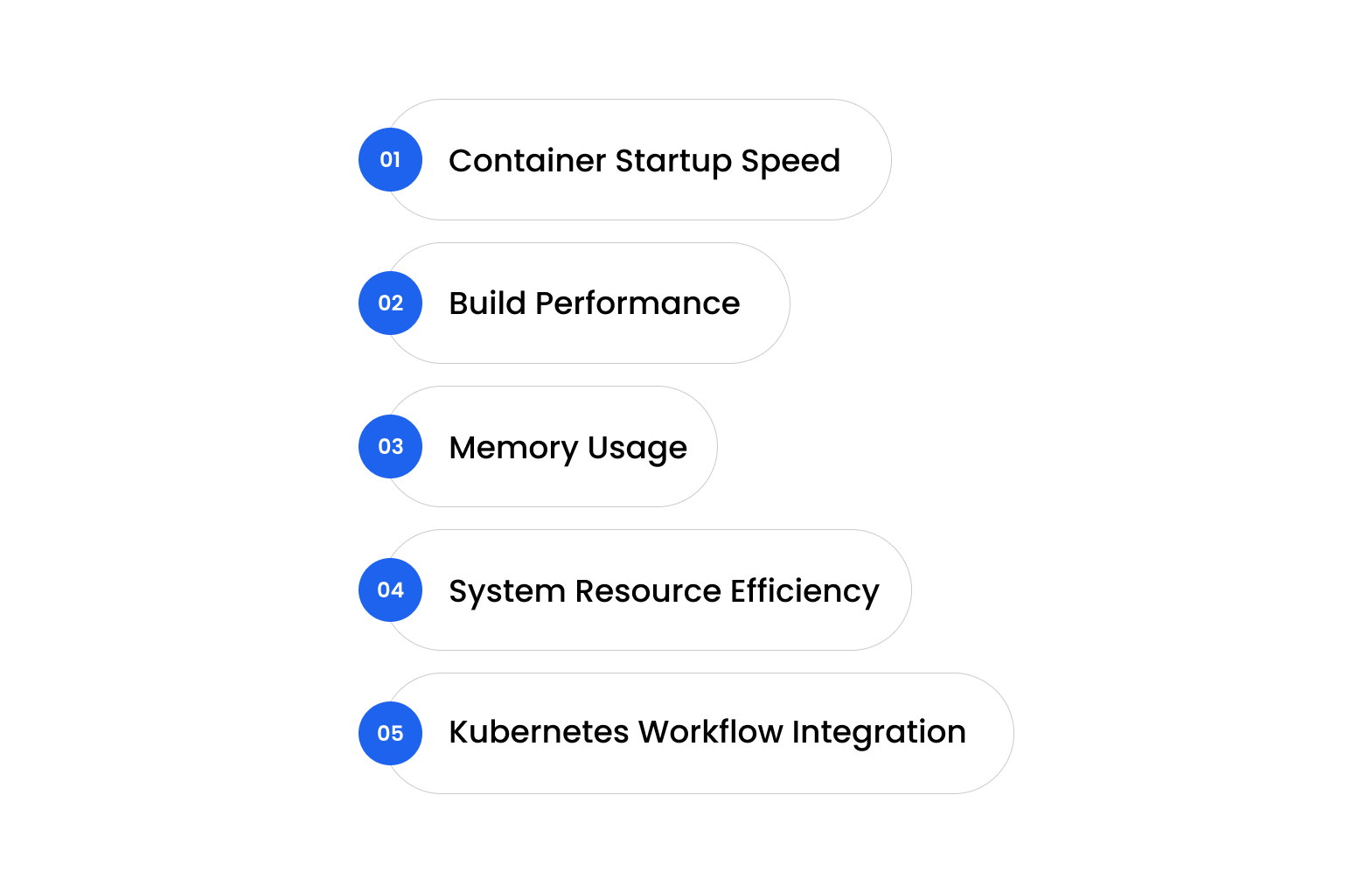
1. Container Startup Speed
Podman often starts containers faster because it doesn’t interact with a root daemon to pass instructions.
2. Build Performance
Podman and Docker both use OCI-compatible tooling, but Podman has advantages when:
- Running in rootless mode
- Running inside CI pipelines
- Operating in Kubernetes-like pod structures
In many cases, Podman is 5% to 20% faster for container builds in resource-limited environments.
3. Memory Usage
Dockerd consumes memory even when idle. Podman has no idle footprint because it has no background service.
4. System Resource Efficiency
Running 50-100 microservices? Podman maintains stability more consistently over time.
5. Kubernetes Workflow Integration
Podman excels because of podman generate kube, a single command that outputs Kubernetes YAML from your local setup. Docker still relies heavily on Compose for multi-container apps.
Security Breakdown of Podman vs Docker - Why Enterprises Prefer Podman?
Security is where Podman’s design outshines Docker the most. Here’s the difference between Podman vs Docker.
1. Docker Weakness
- Central privilege escalation point
- Daemon compromise leads to entire-host compromise
- More attractive to attackers
- Large surface area to exploit
2. Podman Strength
- No daemon
- Containers run under the user account
- SELinux and AppArmor integration
- Better isolation with fewer moving parts
If you’re building for regulated industries (finance, healthcare, govt), Podman wins.
Podman vs Docker: Real Developer Opinions (Summarised)
Developers switching to Podman generally say:
- It feels more modern.
- More secure by default.
- Better for server workloads.
- Perfect for Proxmox.
- Docker Desktop annoyed me into switching.
- Podman integrates better with Kubernetes.
And the most common sentiment: Docker was great for learning. Podman is great for production.
Docker News: Where Docker Still Shines?
To be fair, Docker still performs extremely well in certain situations:
1. Local Development
Docker Desktop integrates cleanly with:
- macOS
- Windows
- GUI workflows
- Volume mounting
Podman Desktop exists, but Docker Desktop is smoother for many.
2. Docker Compose
Compose remains a fan-favourite tool for:
- Local microservices development
- Backend + frontend setups
- Quick environment orchestration
Podman has alternatives, but Compose still has broader adoption.
3. Developer Ecosystem
Docker’s ecosystem is still unmatched:
- Hub
- Documentation
- Tutorials
- Community examples
Docker is not dead, but its monopoly is.
Here’s How You Can Migrate From Docker to Podman.
Podman mirrors the Docker CLI:
alias docker=podman
And suddenly… All your Docker commands are magically converted to Podman commands.
If you are looking for professional assistance, then connect with our team at Enstacked. Book a free consultation.
After the migration, podman can:
- Read Dockerfiles
- Build Docker images
- Run Docker containers
- Push to Docker Hub
- Support Docker networking
There is almost no friction.
Final Verdict: Is Podman Better Than Docker? (2026 Edition)
Here’s the ultimate breakdown. Podman is better than Docker if you care about:
- Security
- Rootless containerization
- Production-grade stability
- Kubernetes alignment
- Running containers on Proxmox
- Running containers on Linux servers
- Daemonless architecture
- Systemd integration
Docker is better than Podman if you care about:
- Beginner-friendly usage
- Docker Desktop
- Local macOS/Windows development
- Long-standing workflows with Compose
What is the industry moving toward?
In enterprises and cloud environments, Podman is replacing Docker. In personal development environments, Docker still holds ground.
But the momentum is clearly shifting, and developers are vocal about it.
Final Conclusion
Docker shaped the last decade of DevOps. Podman is shaping the next one.
As containerization becomes more security-driven, Kubernetes-native, and Linux-integrated, Podman reflects where the industry is headed, not where it has been.
If you are frustrated with Docker Desktop costs, daemon overhead, or security limitations, Enstacked helps evaluate Podman and execute a smooth migration without disrupting existing workflows.

